





To ascertain the Pharaoh and his daughter it is necessary to identify the Pharaoh of the Exodus about who there is much more information.
The Bible tells us when the Exodus occurred 1 Kings 6:1
In the four hundred and eightieth year after the Israelites came out of Egypt, in the fourth year of Solomon’s reign over Israel, in the month of Ziv, the second month, he began to build the temple of the LORD.
Since the text specifies the 480th year, then 479 years must have been completed. Scholars agree that Solomon began construction of the temple in 967 BC.[1] So, 967 BC + 479 BC = 1446 BC. The reigning Pharaoh in 1446 BC was Amenhotep II.
Image; Amenhotep II, Grand Egyptian Museum, Cairo, 2025 Talbot Smith.
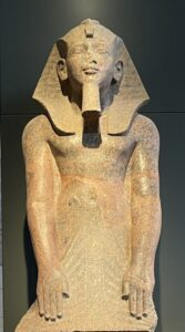 Not only being pharaoh at the right time, but there are also two more requirements of the pharaoh of the exodus. His predecessor must have ruled for more than 40 years since the Bible states that Moses spent 40 years in Midian, and we are told that at the end of that time, the King of Egypt died (Exodus 2:23 and 4:19). The other requirement is that the exodus pharaoh’s first-born son must have died as a result of the tenth and last plague, and consequently, he could not have been the next pharaoh as was the custom. Amenhotep II’s predecessor was Thutmose III (also spelt Thutmosis) who reigned for 47 years. Amenhotep’s successor was Thutmose’s IV who was his second eldest son. His eldest son was Amenemhat, and he did not succeed him as Pharaoh. Thus, these three conditions were met by Amenhotep II who was a Pharaoh of the 18th dynasty.
In the 1840’s Egyptologist Karl Richard Lepsius first proposed that the Exodus took place under Ramases II in about 1260 BC. Almost 100 years later W F Albright made the idea of a thirteenth century Exodus under Ramases II popular. This became to be known as the Late Date Exodus and the former, the Early Date Exodus. It is now falling in favour basically because Ramases II does not satisfy the criteria mentioned above as his predecessor was Seti I who was the second pharaoh of Egypt’s Nineteenth Dynasty and ruled from approximately 1290 to 1279 BC, which was only eleven years. And of course, he reigned from 1279–1213 BC which was way outside the date of the Exodus given in the Bible.
A reason given to dismiss the early date Exodus is that the residence of the 18th dynasty was thought to be at Thebes (modern day Luxor), approximately 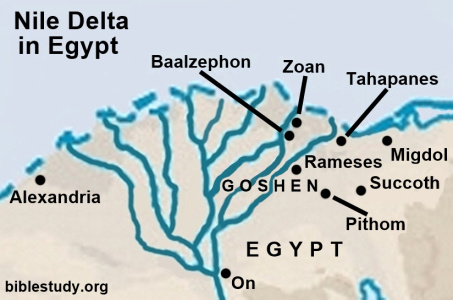 500 km (300 miles) from the Nile delta where the Israelites lived. The Bible text reads that Moses confronted Pharaoh in his palace and Moses’ toing and froing could not have taken place over such a large distance. However, Dr Byrant Wood[2] reported excavations from 1990 to the present, have shown a large royal compound occupying some 10 acres at a site called Ezbet Helmi from the 18th dynasty period. It is situated in Goshen where the Israelites once lived. The excavations showed the buildings were constructed of mud bricks which is consistent with the biblical account of construction by the Hebrew slaves. Exodus 1:11,
So they put slave masters over them to oppress them with forced labor, and they built Pithom and Rameses as store cities for Pharaoh.
The year of Moses’ birth must have been 1526 BC since he was 80 at the time of the Exodus which was 1446 BC as stated previously and during the reign of Thutmose I (Period of his reign 1530 – 1517 BC). He had a daughter, Hatshepsut, but no sons by his primary wife, Queen Ahmose. Thutmose I did have sons by other or secondary wives. One of these sons became Pharaoh Thutmose II. Thutmose II married his half-sister Hatshepsut who was the offspring of Thutmose I with his primary wife, Ahmose, possibly to legitimize his right to the throne. It is reasonable to assume that Hatshepsut married Thutmose II shortly before he came to the throne in 1517 BC and she may have been 15 years old, which means she was born in 1533/2 so she would have been six or seven when Moses was born.[3]
Egyptian records show that Thutmose II and Hatshepsut had a daughter, but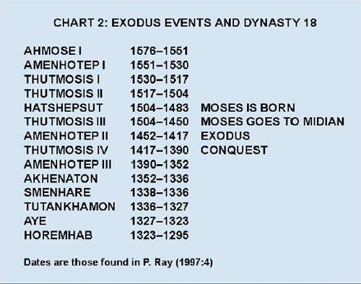 they had no sons. He had a son by a second wife who later became Pharaoh as Thutmose III. Hatshepsut was about 30 when her husband died in approximately 1504 BC. She then reigned as co-regent with Thutmose II’s infant son Thutmose III. This coregency lasted 22 years until Hatshepsut died in 1483 BC after which time Thutmose III assumed sole regent; he ruled a further 33 years.[4]
After the death of her husband, Thutmose II, Hatshepsut did not claim the title of pharaoh of Egypt directly, instead, she was regent on behalf of her stepson (born to a secondary wife), Thutmose III, who was a young child or infant at the time. After less than seven years, however, Hatshepsut took the unprecedented step of assuming the title and full powers of a pharaoh herself. She claimed to be the child of Amun, the supreme king of the gods. And transformed herself into a king by wearing the symbols of kingship. She emphasized her right to rule through her bloodline.[5]
Clearly, Hatshepsut was a strong and determined woman. She could obviously stare down anyone who stood in her way of achieving her desires. These features would have been in her DNA. So, even as a child of 6 or 7, she could desire the baby as a young girl likes to have a doll. And as pharaoh’s daughter she could keep the baby Moses as her own. The scriptures in Exodus 2 tell us that Moses’ sister, Miriam, watched over the little basket containing her brother and when Hatshepsut saw Moses and wanted him, Miriam had the foresight to suggest she could get a wet nurse. Pharaoh’s daughter agreed, and when Moses was two or even three, Jochebed, his mother, brought him to Hatshepsut and he was taken into the royal household where he learnt the Egyptian way of life. Acts 7:22 states, Moses was educated in all the wisdom of the Egyptians. His education in writing would have served him well when later, he recorded the Pentateuch.
Hatshepsut was the sole child who survived past infancy of the Queen consort, Ahmose, and her Pharaoh father, Thutmose I. Queen Ahmose gave Thutmose I four children, three of whom died in their youth. Thus, Hatshepsut was the only woman in 1526 BC who could have had the title “Pharaoh’s daughter,” the designation given in Exodus to the person who saved Moses and later adopted him (Exodus 2:5).[6]
Her images, inscriptions, statues, and cartouches[7] were completely removed from across the land. Chisel-bearers purposefully removed her silhouette while leaving adjacent gods, priests, and sacred hieroglyphs fully intact as shown below.[8]
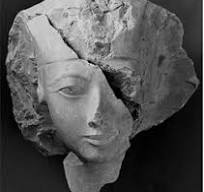
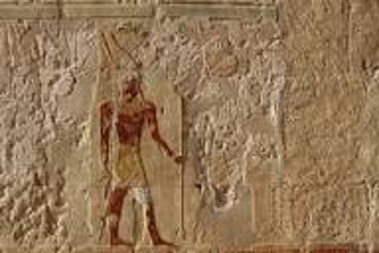
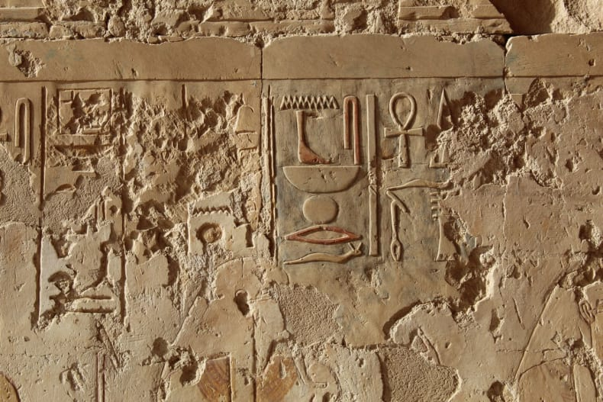
The reasons given for this attempt to remove any trace of her existence have been;
This last suggestion fails because it has not happened to the images of other female pharaohs as shown below.
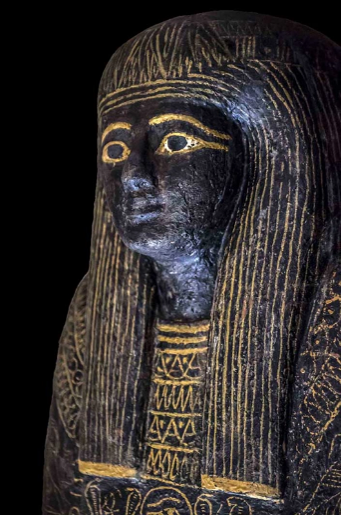 Sobekneferu or Neferusobek (1760-1756 BC)
Sobekneferu (also Nefrusobk, Neferusobek, Sobekkara) was the first confirmed queen regnant (or ‘female king’) of ancient Egypt and the last pharaoh of the Twelfth Dynasty and of the Middle Kingdom. Her reign was brief, lasting three years, 10 months, and 24 days according to the Turin Canon in the 18th century BC.[9] She ruled as king of Egypt from 1760-1756 BC and was the last King of the 12th Dynasty Her name means “beauties of Sobek” and relates to the crocodile god.
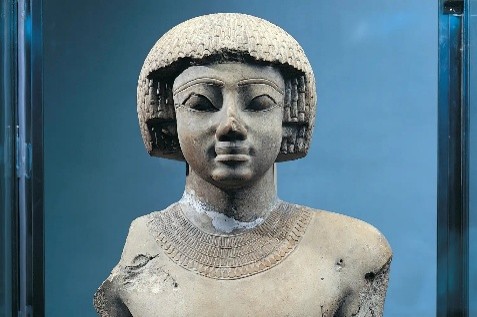 Ashotep (1560–1530 BC) Scholars have little historical record of Ashotep. She is thought to have been the mother of Ahmose I, the founder of Egypt’s 18th Dynasty and New Kingdom, who defeated the Hyksos (foreign rulers of Egypt). Ahmose I credited her in an inscription with holding the nation together during his rule as a child pharaoh when she seems to have been regent for her son. She may also have led troops in battle at Thebes, but the evidence is scant.
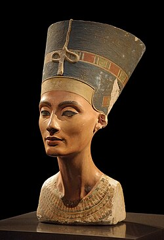 Nefertiti (1370–1330 BC.) was a queen of the 18th Dynasty of Ancient Egypt, the great royal wife of Pharaoh Akhenaten. During Akhenaten’s reign (and perhaps after) Nefertiti enjoyed unprecedented power, and by the twelfth year of his reign, there is evidence that she may have been elevated to the status of co-regent: equal in status to the pharaoh himself. She was often depicted on temple walls the same size as the king, signifying her importance, and shown worshiping the Aten alone. Perhaps most impressively, Nefertiti is shown on a relief from the temple at Amarna which is now in the MFA in Boston, smiting a foreign enemy with a mace before the Aten. Such depictions had traditionally been reserved for the pharaoh alone, and yet Nefertiti was depicted as such.
In the 20th century, Nefertiti was made famous by the discovery and display of her ancient bust, now in Berlin’s Neues Museum. The bust is one of the most copied works of the art of ancient Egypt. It is attributed to the Egyptian sculptor Thutmose, and was excavated from his buried studio complex in the early 20th century
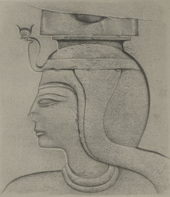 Tausret (1190 – 1188 BC.) Tausret (also known as Twosret, Tausret, or Tawosret) was the wife of the pharaoh Seti II. When Seti II died, Tausret served as regent for his son, Siptah (aka Rameses-Siptah or Menenptah Siptah). Siptah was likely the son of Seti II by a different wife, making Tausret his stepmother. There is some indication that Siptal may have had some disability, which perhaps was a contributing factor to his death at age 16. After Siptal’s death, historical records indicate that Tausret served as female pharaoh of Egypt for two to four years, using kingly titles for herself.
She was not Egypt’s female Pharaoh but was Egypt’s second confirmed woman who ruled in her own right, the first being Sobekneferu/Neferusobek in the Twelfth Dynasty.
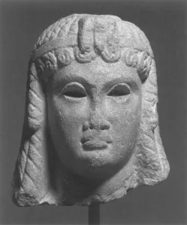 Cleopatra I (born 204, died 176 BC) She was married to Ptolemy V in 193 BC and Ptolemy appointed her as vizier in 187. Ptolemy V died in 180 B.C., and was appointed regent for her son, Ptolemy VI, and ruled until her death. She even minted coins with her image, with her name taking precedence over that of her son. Her name preceded that of her son in many of the documents between her husband’s death and 176 B.C., the year that she died.
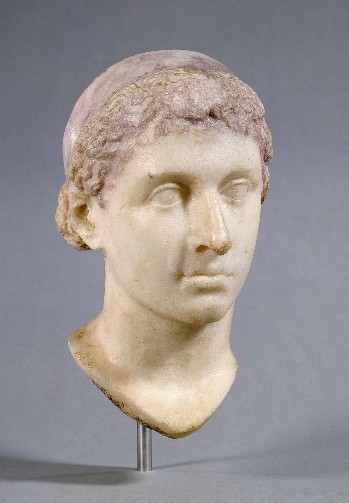 Cleopatra VII (69 – 30 BC) One of the most well known people in history, Cleopatra VII was the last pharaoh of Egypt. She was a Macedonian Greek who ruled Egypt for nearly three decades. Known for her intelligence, she was her father’s favorite. She gained the throne at age eighteen and was intended to rule alongside her ten-year-old brother, Ptolemy, as co-regent. Soon thereafter, advisors in the royal palace conspired against Cleopatra and she was forced to flee to Syria. She secretly asked Julius Caesar (100-44 BC), the Roman general and politician, for help when he was in Alexandria searching for Pompey.
The other reasons suggested has to do with the legitimacy of Thutmose III’s claim to the throne as some Egyptologists believe this destruction happened by her successor Thutmose III, after he had ruled for about 25 years.[10] This then raises the question, if it was out of vengeance, why did he wait so long?
What could have Hatshepsut done to incur so much wrath that the fact that she ever lived had to be removed? This vandalism was on an industrial scale. As tourists wander through the great expanse that is ancient Egypt, they view two thousand years of its history with all the boasting and exaggerations of how great these Pharaohs were, all carved into the rock of columns, walls and stele. Yet there it is only Hatshepsut’s references that have been attacked. What could she have done that incurred such a depth of anger?
A likely reason for such outrage is that it was her taking the infant Moses and incorporating him into the royal household. After he had grown, he killed an Egyptian, and escaped to Midian, returned to Egypt after 40 years, and demanded that Pharaoh release the Hebrew slaves. His refusal incurred the Ten Plagues of God which resulted in the loss of Amenhotep II’s eldest son. It was his second son that followed him to the throne to become Thutmose IV. The plagues and particularly the death of all first-born; people and animals, would have devastated the Egyptian economy. These series of unique events could easily have caused such hatred of a Pharaoh.
If the Bible’s date for the Exodus is correct, then the only female who could be the lady the Bible described as Pharaoh’s daughter was Hatshepsut. If the date is not correct, then every date in the Bible must be questioned.
[1] C. Eames, 2022, 967 BCE: How the Lynchpin Date for Solomon’s Temple Was Determined, Armstrong Institute of Biblical Archaeology.
[2] Bryant, G Wood, The Rise and Fall of the 13th Century Exodus-Conquest Theory, Associates for Biblical Research, April 2008. https://biblearchaeology.org/research-articles/the-rise-and-fall-of-the-13th-century-exodusconquest-theory.
[3] David G Hansen, Moses and Hatshepsut, Associates for Biblical Research, February 2009. Citing G Robins, Women in Ancient Egypt, Harvard University Press, 1993.
[4] Ibid.
[5] Rosicrucian Egyptian Museum. https://egyptianmuseum.org/explore/new-kingdom-ruler-hatshepsut.
[6] David G Hansen, Moses and Hatshepsut, Associates for Biblical Research, February 2009, citing J LoMusio, Archaeology and the Biblical Research 2. No 3 (Summer): 80-93.
[7] A cartouche is an oval or oblong shape that encloses a royal name in ancient Egyptian hieroglyphs.
[8] Oxford Academic. https://academic.oup.com/edited-volume/34485/chapter-abstract/292565169?redirectedFrom=fulltext.
[10] https://www.histolumo.com/history/ancient-egypt/erasure-of-hatshepsut.